By Roof Type
Substrate by substrate — the prep, the primer, the product, and the mils.
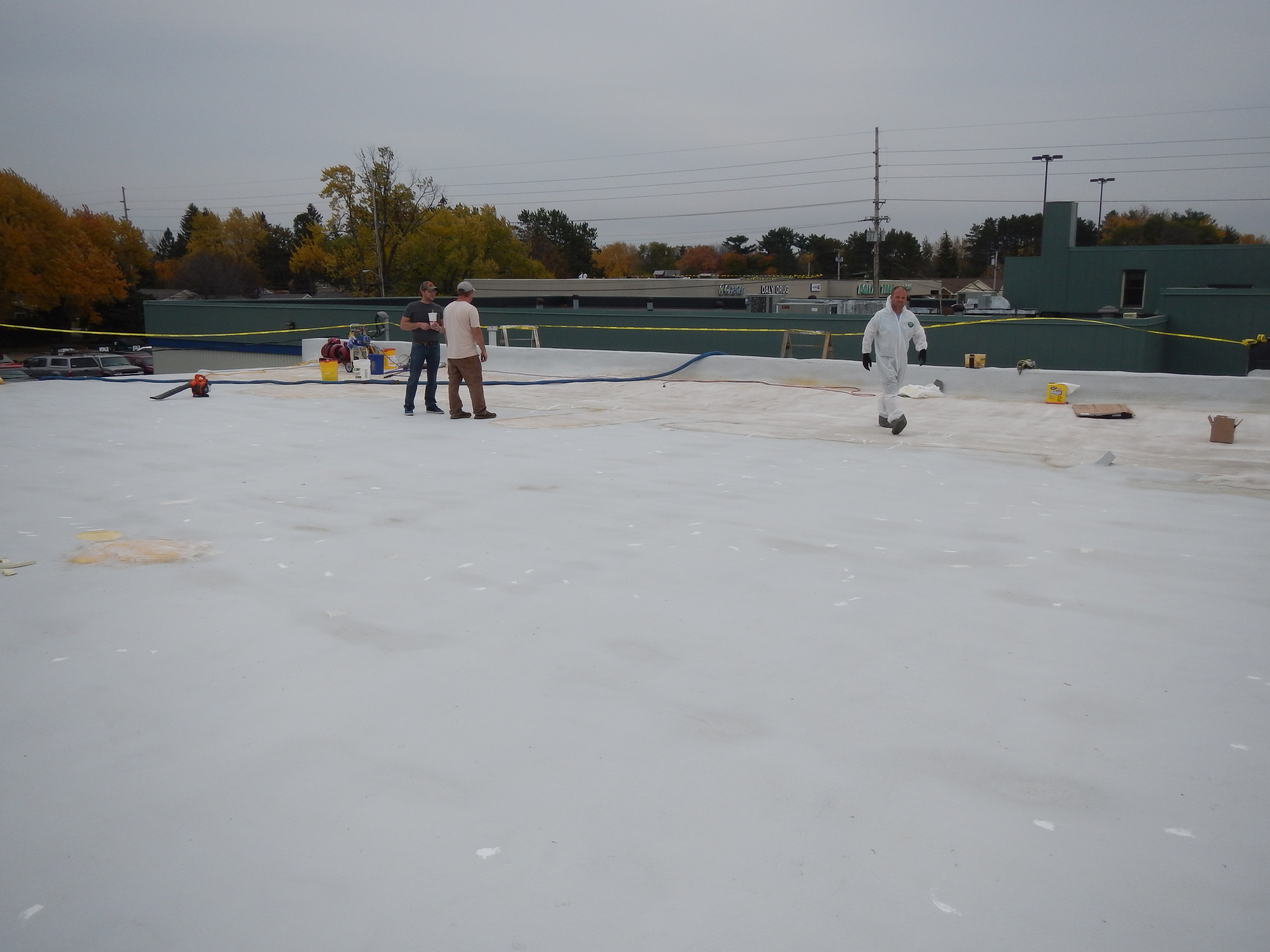
Metal Panel & Standing Seam
The failure mode on metal is never the middle of a panel. It is the lap, the exposed fastener washer, and the ridge and eave terminations — hundreds of small joints working loose as the panel expands and contracts every day.
A membrane retires every one of them at once and then stretches through the ongoing movement instead of cracking at it. Check whether the panel is steel or aluminum before you spec anything: a magnet answers it, and the answer changes the prep entirely. Aluminum cannot take a commercial blast and must be primed the same session it is abraded.
Spec: Degrease, abrade (SP3 power tool on steel; low-pressure brush-blast on aluminum), 7001 Primer, OR-80SLM at 40–60 mil with a stripe pass over laps and fastener lines.
TPO, PVC & EPDM Single-Ply
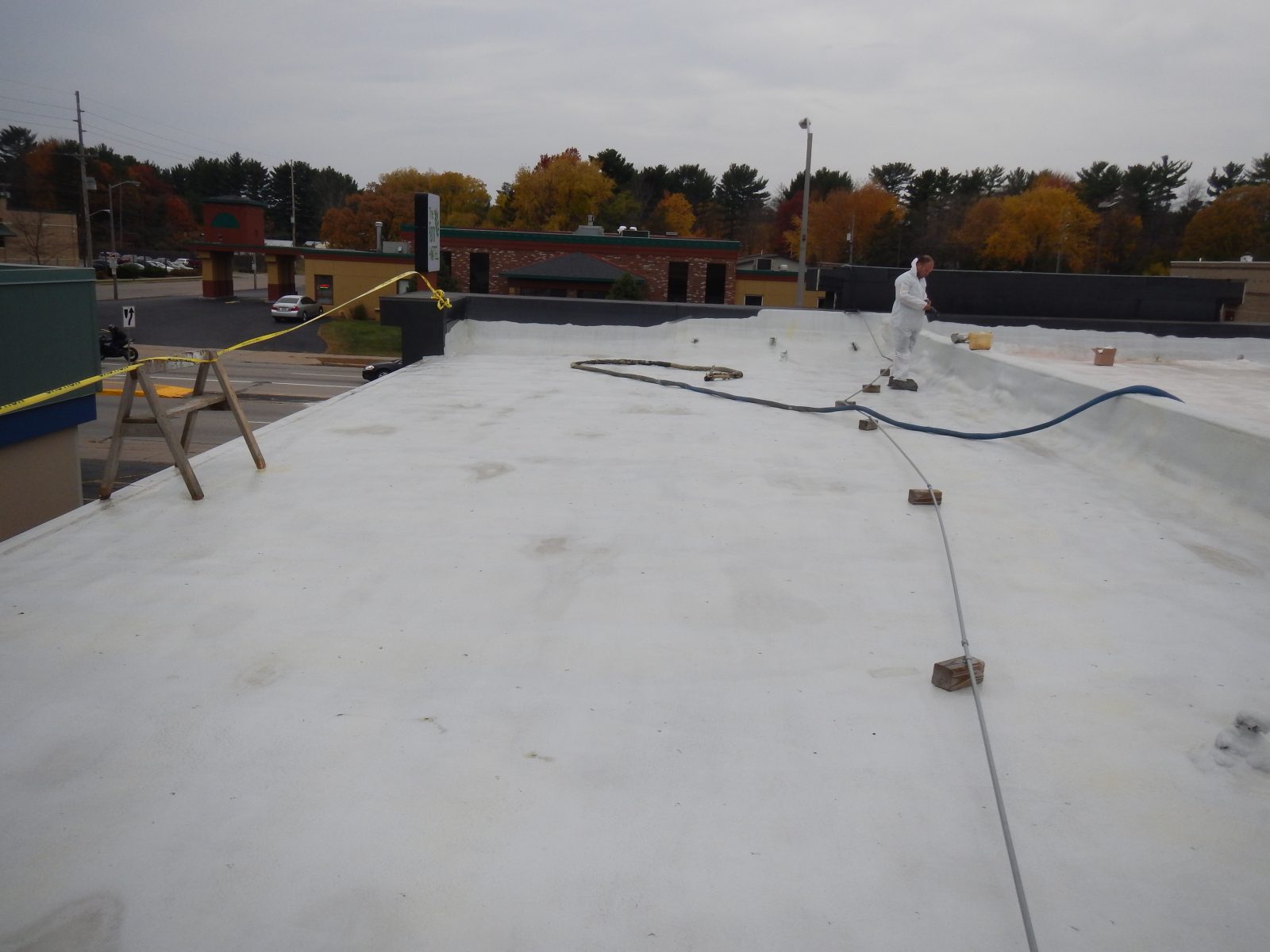
Single-ply roofs age in a specific way: the sheet itself is often still sound while the seams, the flashings, and the surface chemistry have all moved on. Weathered TPO loses its surface layer; EPDM loses plasticizer and goes chalky. Both leave a surface that new material will not grip without help.
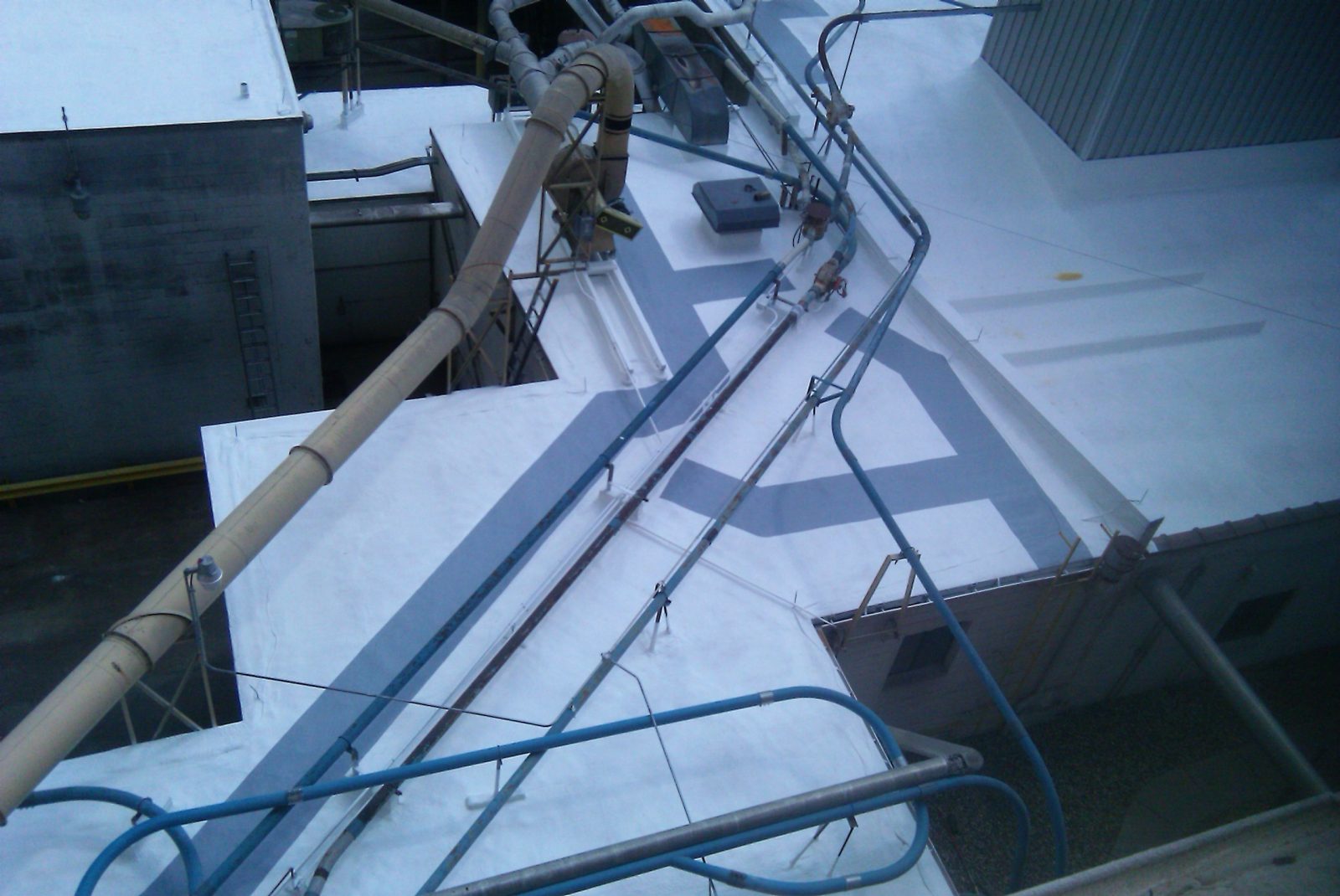
Restoring with a sprayed membrane keeps the existing sheet in place as a substrate and puts a monolithic layer over every seam and flashing at once. This is a very common commercial re-roof alternative because it avoids tear-off, disposal, and exposing the building.
Spec: Wash thoroughly, scrub off chalk, dry, 7001 Primer full-surface, OR-80SLM at 50 mil with 60–80 mil OR7K at curbs and flashings. Always run an adhesion test patch on aged single-ply before committing.
Built-Up, Modified Bitumen & Asphalt
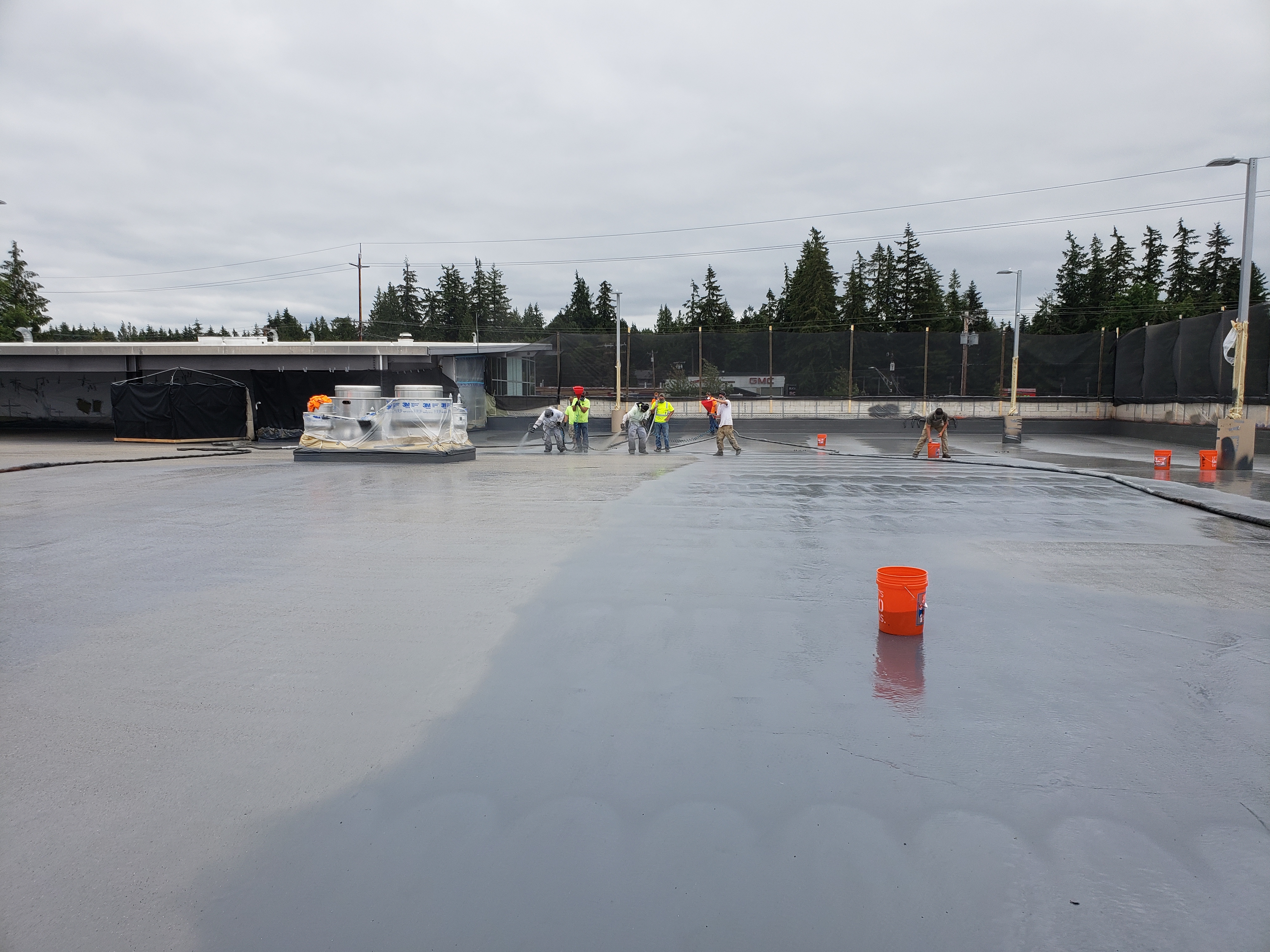
Asphaltic roofs bring one problem no other substrate does: bleed-through. Oils in the old roof will migrate up into a new coating, softening it and staining it, and it happens weeks after the job looks finished.
7001 Primer exists partly for this. It blocks the migration and bonds to the aged asphalt at the same time, which turns a roof that would otherwise need a tear-off into a restoration candidate. Alligatored surface is fine; soft, saturated felt is not, and that distinction is worth a core sample before you quote it.
Spec: Remove gravel and loose material, wash, dry, 7001 Primer as a bleed-block, OR-80SLM at 60 mil. Core-test for saturated insulation first — wet insulation gets replaced, not coated.
Ponding Roofs & the Foam-and-Coat Assembly
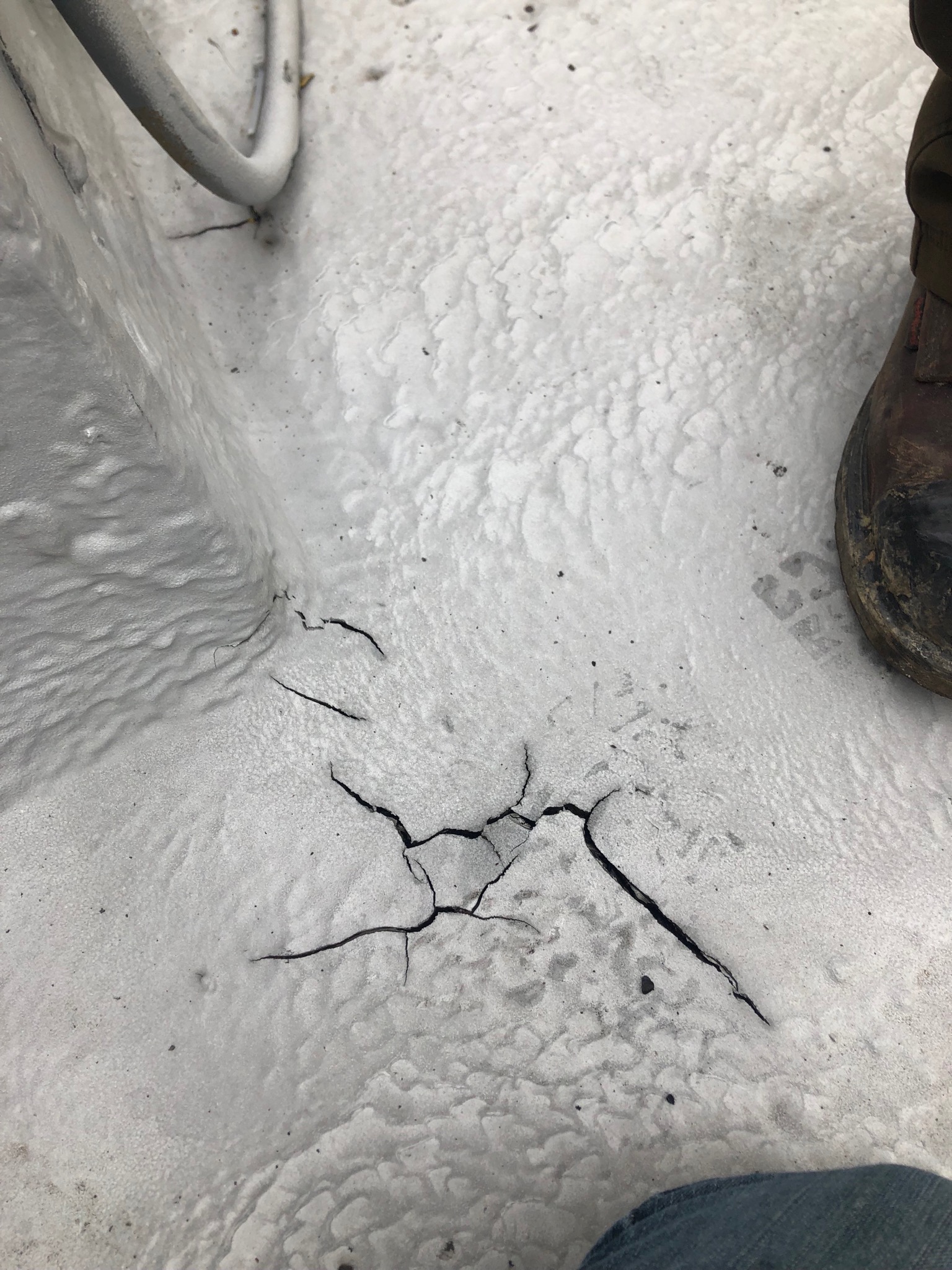
When water stands on a roof, no membrane is really the answer — you are waterproofing a problem instead of removing it. Standing water accelerates every failure mode there is, adds dead load, and finds any weakness in the film given enough time.
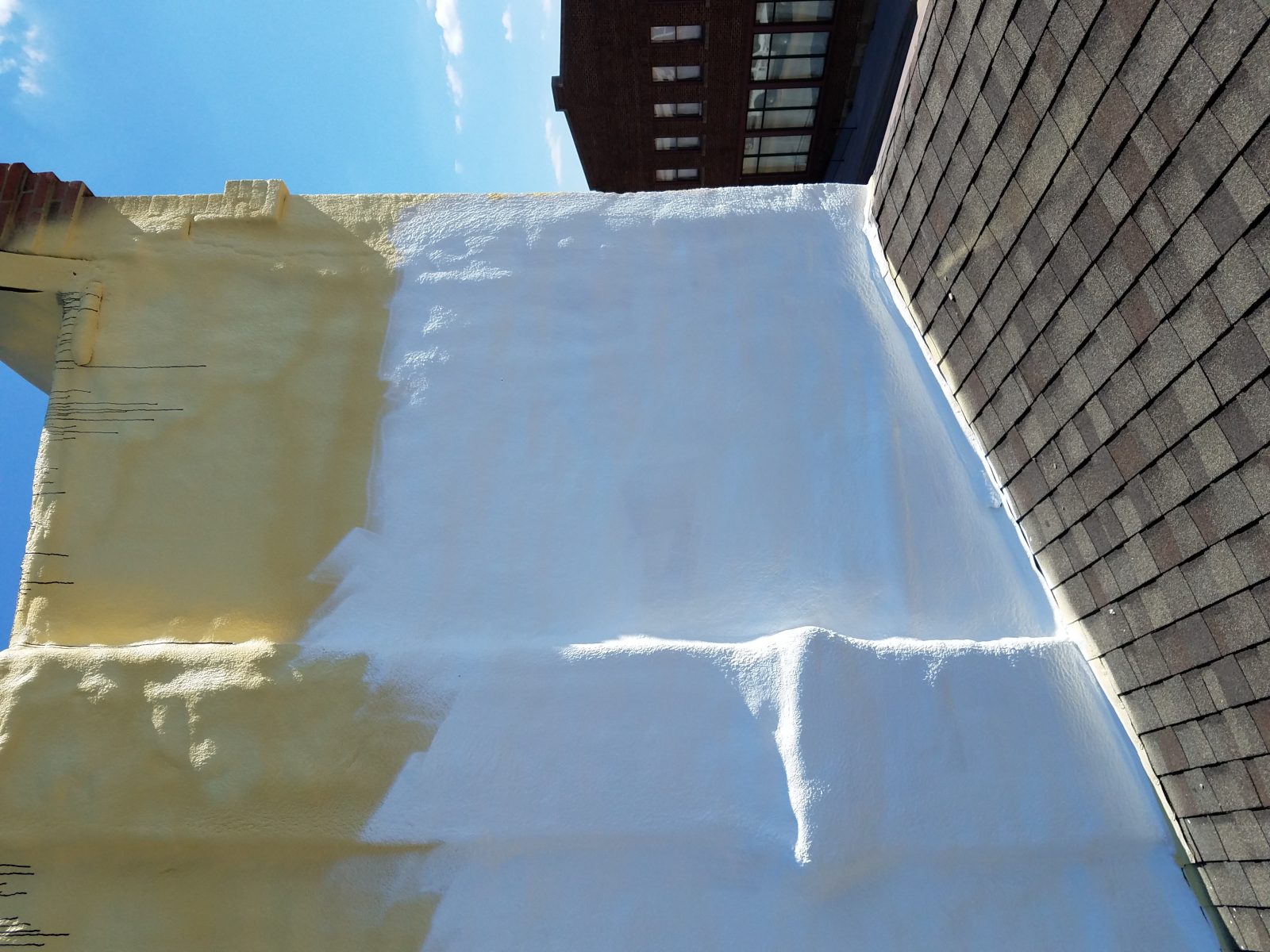
Closed-cell spray polyurethane foam solves it structurally. Because it is sprayed, an applicator can build it thicker in the low areas and taper it toward the drains, creating fall the roof never had. It also adds continuous R-value across the whole plane with no thermal bridging at the fasteners. Foam has no UV or impact resistance on its own — the polyurea over it is the weather surface, and this pairing is standard on industrial roofs.
Spec: 1.5–3" closed-cell foam, tapered to drain, then OR-80SLM at 60 mil minimum over the foam. FJ1 at 80–100 mil in service lanes and under rooftop units.
Concrete & Lightweight Decks
Concrete roof decks, plaza decks, and parking structure tops are the opposite problem from metal: almost no thermal movement, but constant traffic and unforgiving consequences if water gets through to the structure below.
Concrete needs its own prep discipline. Profile matters, and so does moisture — a slab still giving off vapor will blister anything you put on it, no matter how good the adhesion number is.
Spec: Profile to CSP 3–5, test moisture vapor emission, 7001 Primer, OR7K or OR-80SLM at 60–80 mil. FJ1 in vehicle and pedestrian traffic zones.
Other Substrates in the Range
- Existing spray foam roofs — re-surface the foam, then OR-80SLM at 60 mil to restore the weather layer without removing the insulation
- Plywood and OSB decks — dry, sound, and fastener heads set; 7001 Primer then membrane at 60 mil
- Agricultural and cold-storage roofs — condensation on the underside is often the real issue; foam plus membrane addresses both faces of the problem
- Low-slope asphalt shingle sections — restoration where appearance is not the driver
- RV, camper, and travel trailer roofs — Alasta Seal with 7001 Primer and Super Orange Cleaner prep
- Manufactured and mobile home roofs — Alasta Seal, or OR-80SLM at 40–50 mil on sound metal
- Roof decks, balconies, and walkable surfaces — FJ1 as the wear layer over the waterproofing membrane
- Box gutters, scuppers, and gutter troughs — OR7K at 60–80 mil, seamless through the joints
Substrate Not on the List?
Tell us what the deck is and how old it is. If it will not take a membrane we will say so — and if it needs a test patch before anyone commits, we will say that too.
Ask About a SubstrateGet the System Spec'd for Your Deck
Tell us about your project and we will follow up with product details, technical data sheets, and pricing.